
Hairline surface cracking
Narrow surface cracks are usually within what a seal coat can cover and protect. These are the ones where coating genuinely is the right next step on its own.
Serving Minneapolis, Minnesota & surrounding areas
Mon–Fri 8am–6pm · Sat 9am–2pm
Crack filling and sealcoating for Blaine pavement, sequenced so water is dealt with before the surface is coated.
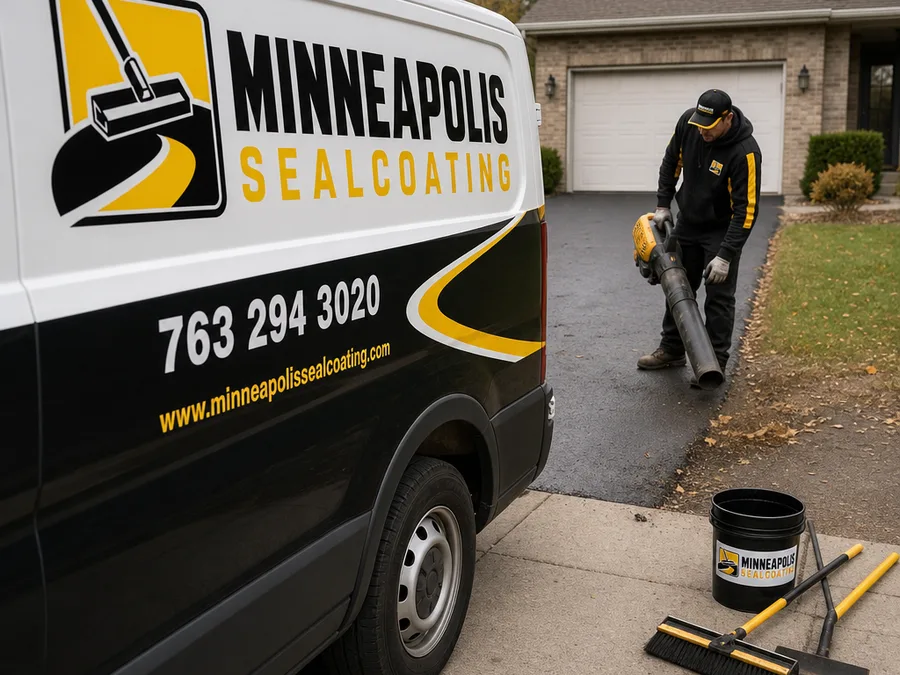
Sealer protects a surface from above. It does nothing about water that is already getting underneath through an open crack.
Minnesota pavement spends a good part of the year moving. Water works into a crack, freezes, widens it, thaws, and goes deeper. By the time a crack is wide enough to notice from a standing position, it is usually carrying water into the base, and that is where real damage happens.
This is why we treat crack filling as part of the sealcoating conversation in Blaine rather than an upsell beside it. A fresh coat over open cracks looks good for a season and solves nothing underneath. The cracks also telegraph back through the new coating, so the finish does not hold either.
Not every crack needs the same treatment, and some surfaces have moved past the point where sealing is the right spend. We would rather tell you that during the site visit than take the job and have you wonder next spring why it did not last.
Part of the site visit is deciding which defects get filled, which get patched, and which mean sealing should wait.
Narrow surface cracks are usually within what a seal coat can cover and protect. These are the ones where coating genuinely is the right next step on its own.
Anything wide enough to take water gets filled or sealed before coating. Hot and cold fill options both have a place, and the surface and crack width decide which one we recommend.
Where the surface is shedding stone, sealer has nothing solid to bond to. These areas need addressing first or the coating comes away with the loose material under it.
Alligatoring and soft spots usually point to a base problem. Patching is the honest answer there, and we will say so rather than sell a coating that hides it for a few months.
Each step depends on the one before it. This is the order the work actually has to run in, and skipping ahead is what produces a short-lived finish.
We walk the surface and record what is there: crack widths, raveled areas, soft spots, and anywhere water is collecting. That map becomes the scope you approve.
A crack full of dirt and growth cannot be filled properly. Cleaning out the channel first is what lets the filler bond to the crack walls instead of sitting in debris.
Filler goes in and is given the time it needs before anything is coated over it. Rushing this step is how fill lines end up visible through a new seal coat.
With repairs handled, the surface is cleaned, edged, masked, and sealed at the specified rate. The coating is then protecting a surface that is actually ready for it.
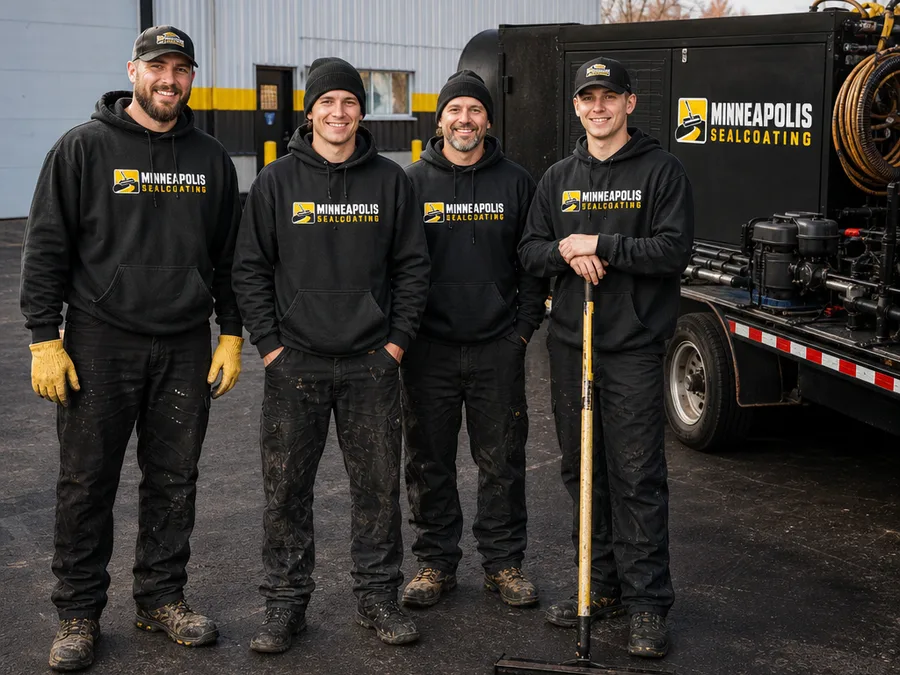
We are based at 2010 E Hennepin Ave, Suite 4, Minneapolis, MN 55413, and Blaine is part of the area we cover from there. There is no separate office or local crew: the same people who do the work in Minneapolis do it here.
Call (763) 294-3020 to talk through the pavement, or request an estimate and we will arrange a time to look at it.
Request an EstimateSealcoating figures published across this site apply in Blaine. Crack filling is scoped separately, because the quantity varies so widely between surfaces.
Sealcoating generally falls between $0.20 and $0.50 per square foot. Small one-car driveways are commonly $200 to $350, and larger driveways and small lots usually range from about $500 to $1,500 and up, set by layout and condition.
Crack filling depends entirely on how much cracking the surface has and how wide it is, so it is measured on site rather than estimated from a photograph. We give you both parts of the figure before the work is booked, and you will know which part is repair and which is coating.
These come up whenever repairs and coating are quoted together. A site visit settles which applies to your pavement.
We can, and we do not recommend it. Sealer bridges a narrow crack but does not close one that is open, so water keeps reaching the base and the crack shows through the new coating.
No. A filled crack is a repair, not a cosmetic fix, and the line usually remains faintly visible after coating. What it does is keep water out, which is the part that protects the pavement.
Widespread alligator cracking, soft areas, and surface that crumbles underfoot all point that way. We will tell you what to fix first so the next seal coat is worth paying for.
The work needs dry pavement and temperatures that support curing, which in practice means late spring through early fall. We also plan around rain risk and cool nights, since both extend dry time.
Tell us about the pavement, then we can discuss the next practical step. Our office is at 2010 E Hennepin Ave, Suite 4, Minneapolis, MN 55413.
Call Now (763) 294-3020